

Scalp SOS: 5 Products to Shield Your Head from Winter Woes
DeLand's mild winter (65-75°F with 60-65% humidity) creates unique scalp challenges: indoor heating dries scalp tissue while outdoor humidity prevents proper moisture evaporation, creating perfect conditions for fungal overgrowth, seborrheic dermatitis flares, and product buildup. After 20 years treating winter scalp issues at The Warehouse Salon, I've identified five professional treatments that address our specific Florida winter scalp problems.
Hi, I'm Jennifer Lopez, and with over 20 years of experience as a stylist at The Warehouse Salon in DeLand, I specialize in corrective color, dimensional highlights, and precision cuts. Every November through February, my consultation schedule fills with clients complaining about sudden scalp issues: flaking, itching, oiliness that returns hours after washing, or mysterious redness. Most assume they developed dandruff overnight, but what they're experiencing is Florida's winter paradox where mild outdoor temperatures and persistent humidity combine with forced-air heating to create scalp chaos.
In this guide: I'll explain the five scalp treatments I reach for most during DeLand's winter months, share real client stories showing which products solved specific scalp issues versus which failed, detail professional diagnostic techniques, provide proper application techniques, and answer common questions about winter scalp care in Volusia County's climate.
Understanding DeLand's Winter Scalp Challenges
When Yara came in for her December highlight appointment complaining about "sudden dandruff," I performed scalp analysis using a dermatoscope. What I saw wasn't dandruff. Her scalp showed seborrheic dermatitis: yellowish, greasy flakes concentrated around her hairline and crown. She'd been using Head & Shoulders for three weeks, making her condition worse. I switched her to Malibu Scalp Wellness Shampoo. Week 1: flaking increased (normal purging). Week 2: flaking decreased by 60%. Week 4: completely clear scalp.
1. Malibu Scalp Wellness Shampoo: The Foundation Treatment

Malibu Scalp Wellness Shampoo: Chelating shampoo with vitamin C and gentle surfactants. For normal to oily scalp: use 2-3 times weekly. For dry scalp: use once weekly. Application: wet hair thoroughly, apply nickel-sized amount to scalp, massage in small circular motions for 90 seconds (this loosens flakes and stimulates circulation), add water gradually to emulsify, then rinse for 60 seconds.
Zora came in January with thick, white flakes concentrated at her part line. Her scalp felt tight when I moved it (indicating dehydration). She'd been using Nizoral three times weekly for a month, which stripped her scalp. I had her stop all treatments for one week, then started Malibu Scalp Wellness once weekly. After the first use, her scalp felt "normal for the first time in months." Three weeks later, her flaking was 90% reduced.
2. Natulique Exfoliative Scalp and Skin Therapy: The Problem Solver
Natulique Exfoliative Scalp and Skin Therapy: Physical and chemical exfoliant with bamboo stem powder and salicylic acid. Use once weekly maximum. Application: section hair into four quadrants, apply directly to dry scalp, massage gently for 3-5 minutes, leave on for 5 minutes, rinse thoroughly and follow with gentle shampoo.
Lavinia came in frustrated because "everything makes my scalp worse." She'd tried tea tree oil (caused contact dermatitis), coconut oil (fed fungal overgrowth), and apple cider vinegar (disrupted scalp pH). I saw seborrheic dermatitis complicated by over-treatment: redness, flaking, and thick buildup from oils. I started her on Natulique Exfoliative once weekly for three weeks, paired with Malibu Scalp Wellness 2x weekly. After three treatments, her scalp was clear. She wanted to continue the exfoliant, but I explained that over-exfoliation would recreate her problem.
3. Milkshake Energizing Blend Scalp Treatment: The Circulation Booster
Milkshake Energizing Blend Scalp Treatment: Leave-in treatment with rosemary extract and sage. Apply to clean, towel-dried scalp 2-3 times weekly. Part hair into 1-inch sections, apply 3-4 drops per section, massage with fingertips using firm pressure in circular motions for 2-3 minutes, do not rinse. The tingling sensation is increased blood flow bringing oxygen to hair follicles.
Nephele came in February noticing increased shedding and scalp that felt "tired." Her scalp felt cool to touch (indicating poor circulation) and lacked healthy pink tone. This is "winter scalp stagnation," where reduced circulation causes temporary increased shedding. I recommended Milkshake Energizing Blend 3x weekly. She texted worried because her scalp was "tingling and felt warm." I explained that's exactly the goal. After six weeks, her shedding normalized.

4. Nioxin Scalp Relief Kit: The full System
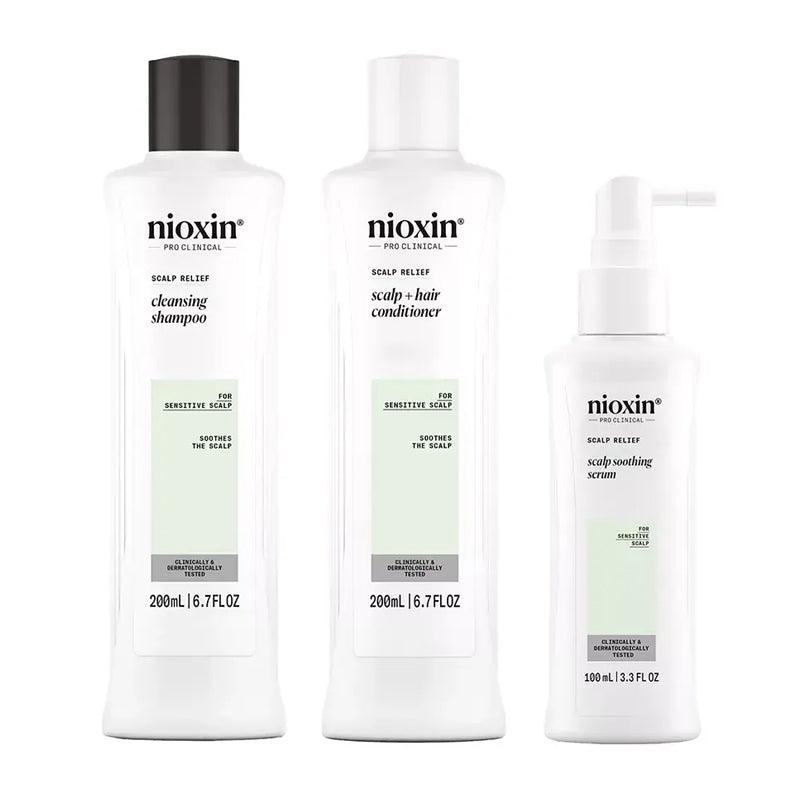
Nioxin Scalp Relief Kit: Three-step system with cleanser, conditioner, and leave-in treatment. For sensitive scalp: use system 3-4 times weekly. Apply leave-in only to affected scalp areas (temples, crown, hairline).
Zenith came in with what she called "sensitive scalp" but examination revealed seborrheic dermatitis. I explained Nioxin Scalp Relief would soothe discomfort but wouldn't treat the underlying fungal component. She tried it anyway, and four weeks later returned frustrated. It soothed sensitivity, but couldn't address the root cause. We then started proper antifungal treatment, which cleared her condition in six weeks.
5. Amika Reset Pink Charcoal Scalp Cleansing Oil: The Deep Cleanse
Amika Reset Pink Charcoal Scalp Cleansing Oil: Pre-shampoo oil treatment with pink charcoal and sea buckthorn oil. Use once weekly. Apply to dry scalp in sections, massage for 5 minutes, add water to emulsify (turns milky white), then shampoo twice.
Isolde came in January with sudden cystic acne along her hairline (called "pomade acne"). Examination showed thick, waxy buildup. She'd been using leave-in conditioner, styling cream, and dry shampoo daily without deep cleansing. Her pores were blocked. I did an in-salon clarifying treatment, then sent her home with Amika Reset for weekly use. Her hairline acne cleared 80% within two weeks.

Common Questions About Winter Scalp Care in DeLand
How is DeLand winter different from northern winter for scalp care?
Northern winter (20-40°F, 20-30% humidity) causes straightforward dryness: cold air can't hold moisture, scalp needs hydration. DeLand winter (65-75°F, 60-65% outdoor humidity with 30-40% indoor) creates conflicting conditions: outdoor humidity prevents proper evaporation while indoor heating dries scalp tissue. Heavy moisturizing treatments that work in New York winter feed fungal growth in Florida's persistent humidity.
Do I need different products for DeLand's winter versus summer?
Not different products, but different usage patterns. Summer (85-90% humidity): control sebum production, use lighter products, cleanse every 1-2 days. Winter (60-65% humidity): focus on barrier repair, use richer treatments but rinse thoroughly, cleanse every 2-3 days, strategic leave-in treatments only where needed.
How do I know if I have dandruff, seborrheic dermatitis, or just dry scalp?
Professional diagnosis matters because treatment differs significantly. Dry scalp: small, white flakes that feel dry and powdery, no redness, itching relieved by moisturizing. Dandruff (fungal overgrowth): larger, white to yellowish flakes, mild itching, scalp may look slightly oily, improves with antifungal treatments. Seborrheic dermatitis: greasy, yellowish flakes that stick to hair, redness and inflammation, concentrated around hairline/crown/behind ears, itching not relieved by moisturizing, requires antifungal plus anti-inflammatory treatment. If home treatment doesn't improve condition within 4 weeks, schedule professional consultation.
Can I use scalp treatments with color-treated hair?
Yes, but timing matters. Immediately after color (first 2 weeks): avoid clarifying treatments and exfoliants. Use only gentle products like Malibu or Nioxin. After 2 weeks: gradually introduce stronger treatments. Before color: avoid oil-based treatments for 48 hours. After keratin: wait 2 weeks before using scalp treatments.
How much should I use to see results?
For cleansing products: nickel-sized amount for shoulder-length hair, quarter-sized for long hair. For exfoliating treatments: 1-2 drops per 1-inch section, approximately 10-12 drops total. For leave-in treatments: 3-4 drops per section for affected areas only. For oil cleansers: pump 4-6 times for average density hair. The key is proper technique (thorough massage, adequate time, complete rinsing), not excessive amounts.
Ready to Solve Your Winter Scalp Issues?

Let's create a customized scalp treatment plan that addresses your specific condition. During your consultation at The Warehouse Salon, I'll perform professional scalp analysis using dermatoscope magnification to identify whether you're dealing with seborrheic dermatitis, fungal overgrowth, product buildup, sensitivity, or simple dehydration, explain the difference between conditions that look similar but require different treatments, demonstrate proper application techniques for the products I recommend, and create realistic timeline expectations based on your specific condition severity.
Come see us at 1782 S Woodland Blvd, DeLand, FL 32720. Give us a call at (386) 873-6188 to schedule your scalp consultation.
We can't wait to help you achieve the healthy, comfortable scalp you deserve with professional diagnosis, proper treatment selection, and techniques that actually work in DeLand's unique climate conditions.
Winter in North Jersey is no joke. Whether you're in Fairfield, Wayne, or Montclair, the cold dry air hits different up here.
From the team at The Warehouse Salon in Fairfield, NJ. Questions? Book a free consultation or call (973) 500-4536.
Leave a comment